Skip to Content

Masonry

Freemasonry

Passport (01)

What is Freemasonry?

  • Freemasonry is an initiatory order whose members are intertwined by common ideals, moral, spiritual and social.
  • Freemasonry recognizes no distinction of religion and emphasizes the duties of citizenship. Religious or political discussion is not permitted in Lodge meetings.
  • Freemasonry offers no financial benefits.
  • Freemasonry supports a wide range of charities, both Masonic and non-Masonic.

Famous Masons

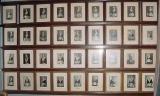
Mari Maestri ai MLNAR

This is a list of famous Romanian Freemasons.

Since Romanian Masonry has been suppressed in communist era, records of entire Grand Lodges have been destroyed. Because of this, masonic membership can sometimes be difficult to verify.

Frequently asked questions about Freemasonry

No secrets, find exactly what Freemasonry is!

Landmarks of Freemasonry

(Mackey's Revised Encyclopedia)

  1. The Modes of recognition.
  2. The division of Symbolic Masonry into three degrees.
  3. The legend of the third degree.
  4. The government of the fraternity by a presiding officer called a Grand Master, who is elected from the body of tile craft.

The Library and Museum of Freemasonry

Freemasonry is one of the world's oldest secular fraternal societies, a society concerned with moral and spiritual values. Members are taught the rules of Freemasonry by a series of ritual dramas that follow ancient forms and use stonemasons' customs and tools symbolically.

The Library and Museum of Freemasonry houses one of the finest collections of Masonic material in the world. It is open to the public, Monday to Friday, free of charge.

The Charges of a Free-Mason

The Charges of a Free-Mason
(Anderson's Constitutions, 1723)

These will be the rules of ethical conduct of a Brother Mason ...

Symbols of Freemasonry

The Three Great Lights

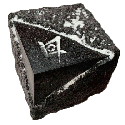
The Three Great Lights of Regular Freemasonry are the Volume of Sacred Law, the Square and the Compass. Taken together, they represent a symbol of Masonic life, because no regular Lodge can open the Craft without their presence.

The Volume of Sacred Law

The Volume of Sacred Law is a symbol of Tradition.

About Freemasonry

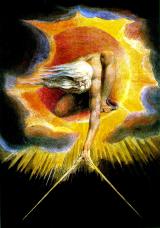
God Geometry

Freemasonry is a fraternal organization that arose from obscure origins in the late 16th to early 17th century. Freemasonry now exists in various forms all over the world, with a membership estimated at around six million, including approximately 150,000 in Scotland and Ireland, over a quarter of a million under the jurisdiction of the United Grand Lodge of England and just under two million in the United States.

The fraternity is administratively organized into independent Grand Lodges or sometimes Orients, each of which governs its own jurisdiction, which consists of subordinate (or constituent) Lodges. The various Grand Lodges recognize each other, or not, based upon adherence to landmarks (a Grand Lodge will usually deem other Grand Lodges who share common landmarks to be regular, and those that do not to be "irregular" or "clandestine").

There are also appendant bodies, which are organizations related to the main branch of Freemasonry, but with their own independent administration.

Scottish Freemasonry

An introduction

Scottish Freemasonry

A Way of Life

There are now about 4 million Freemasons under more than 100 "regular" Grand Lodges world wide. Membership of the Craft is open to every respectable man who believes in his personal Supreme Being - usually known in Masonic terms as The Great Architect of The Universe, Grand Geometrician of the Universe or Most High. These descriptive names show the importance the Freemason places on his Supreme Being in the order of things in life.

Romanian Freemasonry

N.G.L.R. Banner

Brief history of Freemasonry in Romania

Masonry as we know it today, has arrived in Romania at the beginning of 17th century, coming from Istanbul along with the ships used for transporting wheat, honey and rams to the capital of Ottoman Empire. On the land, it has come from Germanic countries.

Masonry is attested in documents from 1734, the First Grand Master being the ruler of Moldavia, Nicolae Mavrocordat, which has foreseen and started Masonic papers. Due to this, he has been forced to move to Principality of Muntenia. The officers of the first lodge are known to be the nobles.

The First Grand Lodge, has been installed in 1880, in Bucharest, today's capital of Romania.

In our Masonic history there still are white stains. Consequently, tsarist armies have brought lodges on Romanian territory, even the great poet Puskin being a member of one of these lodges.

Syndicate content